Hydroponics Company New Zealand
Company
Shop By Category
Shop Products
T&Cs
Shop Online
  • Free standard delivery on orders $50+
  • NZD prices
  • NFT and deep water culture systems
  • Tracked delivery across New Zealand

Trellis Netting | Plant Support Net | Grow Tent Trellis Net

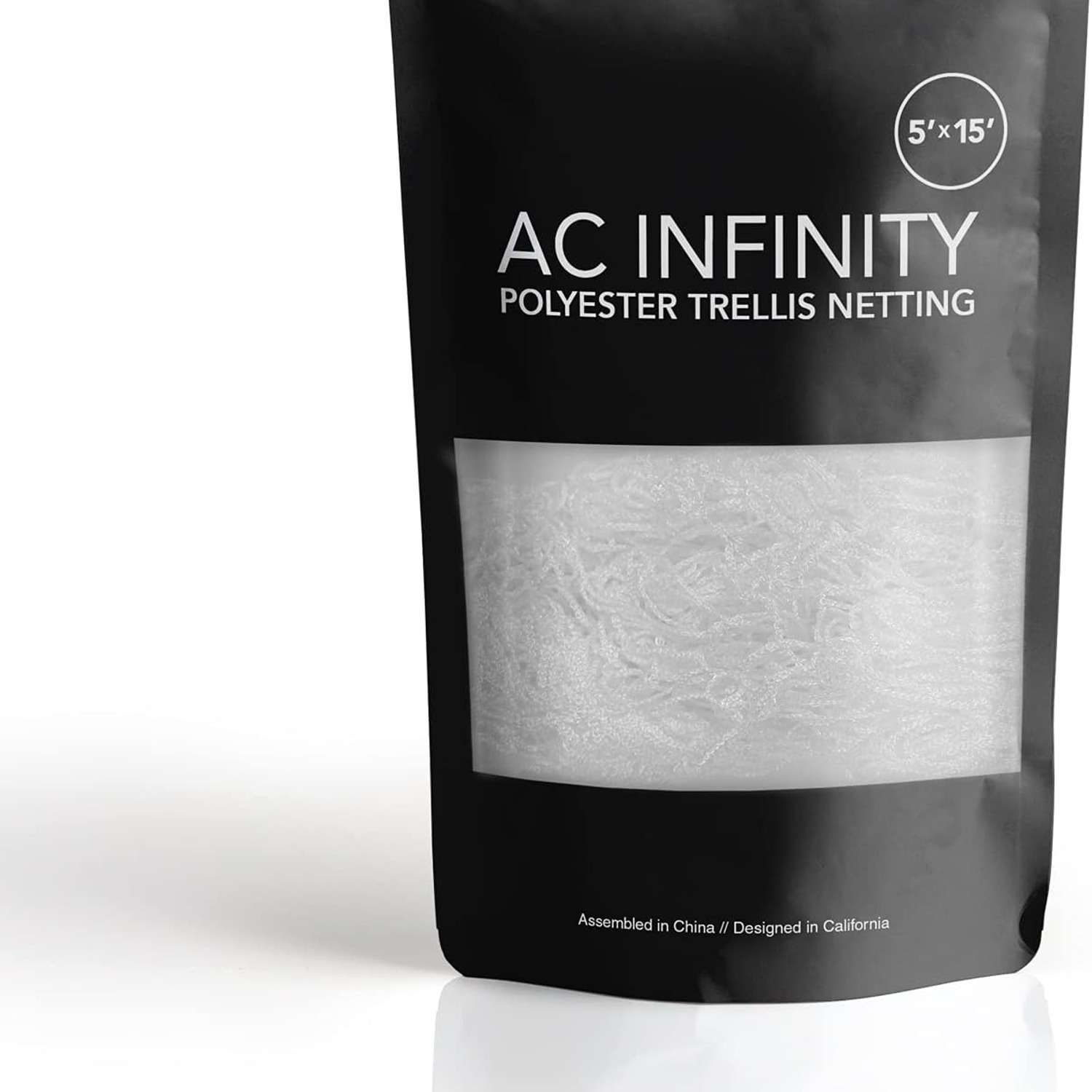
Polyester Trellis Netting 1.5 x 4.6 m

$53.99 $64.99 Save $11.00
  • 15 cm Square Cells
  • Cut To Fit
  • Soft On Stems
  • Three Ways To Hang

Price: $53.99 $64.99

  • Delivery time: 5 to 7 days, after 24 to 48 hours for handling and processing
  • Free delivery across New Zealand on orders $50+, otherwise a flat $22.00
  • Pay by card or PayPal, handled by the payment provider
  • 15-day change-of-mind policy, plus your Consumer Guarantees Act 1993 guarantees

Often bought together

Product specifications
Product NamePolyester Trellis Netting
BrandAC Infinity
Model NumberAC-TNA15
Manufacturer Part NumberAC-TNA15
UPC819137021594
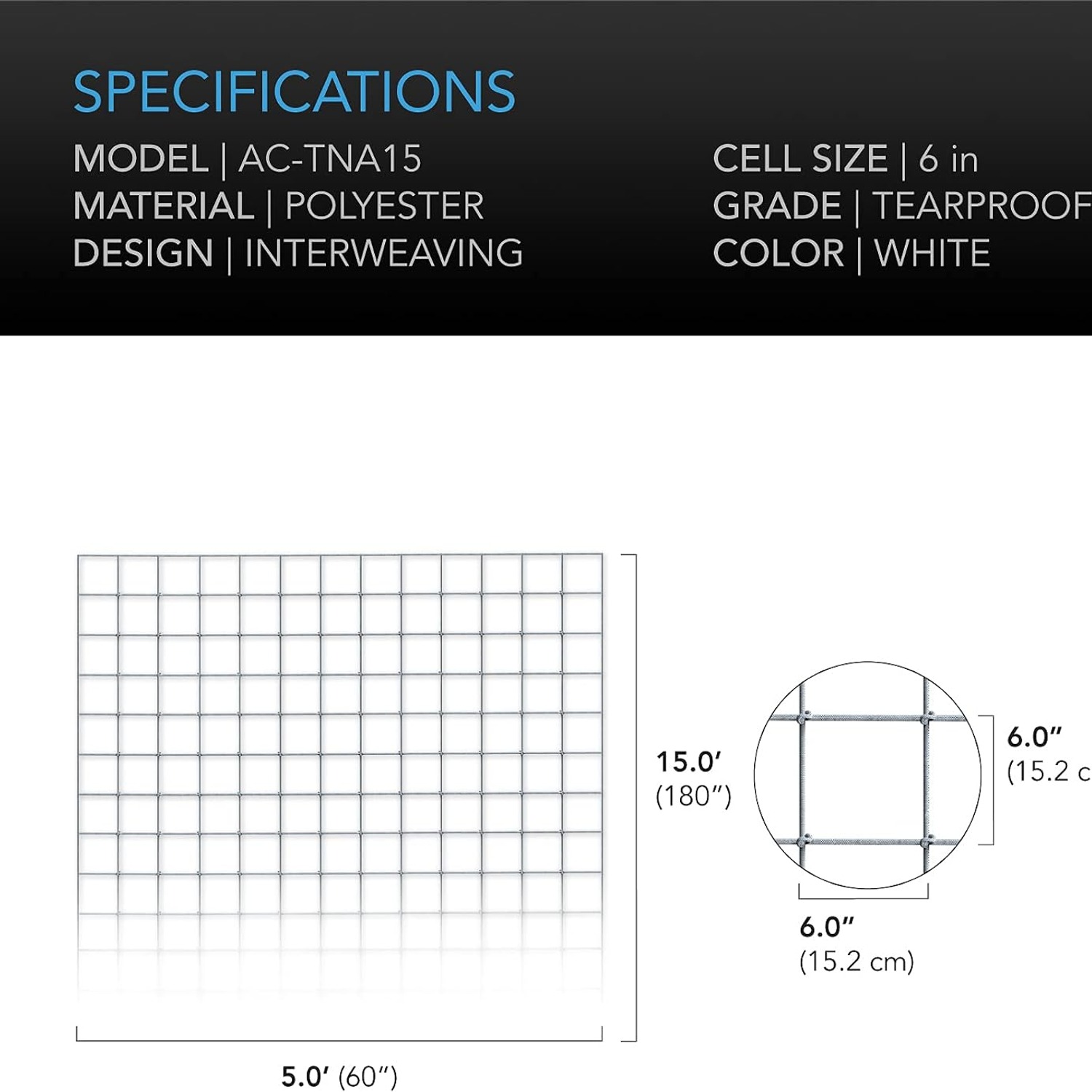
Net Size1.52 m x 4.57 m (5 x 15 ft)
Coverage Area6.97 square metres
Cell Size15.24 x 15.24 cm (6 x 6 in)
MaterialPolyester
DesignInterweaving
ColourWhite
Item Weight0.07 kg
Number of Items1
Packs1
Weight0.07 kg
Shipping & returns

Tracked delivery anywhere in New Zealand. It is free on orders of $50 or more, and a flat $22.00 below that. Allow 5 to 7 days, after a 24 to 48 hour handling time.

This shop's own returns policy gives you 15 days from delivery to change your mind, on every product it sells. Send it back in its original packaging with proof of purchase, with buyer-paid return postage, processed within 24 to 48 hours of the return arriving. You cover the cost of returning it unless the item is faulty.

If it arrives faulty, damaged or not as described, we put it right at no cost to you under the Consumer Guarantees Act 1993's consumer guarantees, with reasonable return costs handled as required by law.

Shipping details · Refunds and returns

15 cm Square CellsRoomy 6 x 6 inch openings leave space for your hands when pruning and picking.
Cut To FitTrim the 1.5 x 4.6 m net down to suit a tent, bed or frame.
Soft On StemsSmooth polyester strands rest against stems without digging in.
Three Ways To HangUse it flat overhead, upright against a frame, or in an A-frame over a bed.

Give climbing crops something to hold onto with trellis netting that spreads growth sideways and takes the weight off tired stems.

A 1.5 x 4.6 m white polyester net with 15 cm square cells, cut to fit and hung flat, vertically or as an A-frame for tomatoes, cucumbers, peas and beans.

A 1.5 x 4.6 m polyester trellis net with 15 cm square cells, made for climbing and sprawling crops.

The interwoven construction holds its shape under the weight of heavy vines and fruit.

Large openings mean you can reach through comfortably to train shoots, pinch tips and harvest.

Hang it horizontally inside a grow tent, run it vertically along a wall, or stretch it over an A-frame outdoors.

Cut the net to length with scissors so one roll can cover several different setups.

Polyester Trellis Netting 1.5 x 4.6 m

Climbing crops want to lean on something. Tomatoes get top heavy once the trusses fill out, cucumbers hang off thin stems, and peas and beans will grab the first thing they touch. This trellis netting gives them a structure to hold while keeping the fruit off the ground and the leaves spread out in the light. It measures 1.52 m by 4.57 m, which covers roughly 6.97 square metres in one piece.

The net is made from polyester with an interwoven construction, so the strands lock at each junction instead of sliding around when load comes on one corner. That matters once a vine starts pulling in one direction. The surface is smooth rather than rough, which means stems rest against it without being sawed at every time the plant moves in a breeze or a fan cycles on.

Cells are 15.24 cm square, or 6 x 6 inches. That is a practical size for a plant support net. It is tight enough to catch a shoot and hold a fruit cluster, and open enough that an adult hand fits straight through for pruning, tying and picking. Smaller mesh looks reassuring until you try to get a cucumber back out through it.

Three mounting styles cover most situations. Flat and horizontal across the middle of a grow tent, the net supports side branches and encourages lateral growth. Run vertically along posts or a frame, it lets climbing plants head upwards and stay clear of damp soil. Stretched over an A-frame outdoors, it carries the weight of heavier ground crops like squash and eggplant while shading the soil below.

You do not need to use the whole roll. Cut it to length with sharp scissors and set up the piece you need, then keep the rest for next season or a second bed. Between crops, clear the dead growth, wash the net if it has gone sticky, and roll it for storage. Country of origin, exact packaging dimensions and any colour variants beyond white are not specified in this record.

Not sure yet? That is fine.

You can change your mind. This shop's own returns policy gives you 15 days from delivery to send it back in its original packaging with proof of purchase, with buyer-paid return postage.

If goods are faulty, damaged or misdescribed, contact us for the remedy required by the Consumer Guarantees Act 1993. The appropriate repair, replacement or refund and reasonable return costs depend on the circumstances; change-of-mind conditions do not apply to statutory remedies. Read the full detail on our refunds and returns page, or ask us anything before you order.

Frequently Asked Questions

What is trellis netting?

It is a wide net of square openings that you stretch across a frame, posts or a grow tent so plants can grow through it and lean on it. The net takes some of the weight that stems would otherwise carry alone. Growers use it both to support fruit and to spread growth out sideways.

What size is this net?

It measures 1.52 m by 4.57 m, which is 5 x 15 ft, covering about 6.97 square metres. Each cell in the mesh is 15.24 x 15.24 cm, or 6 x 6 inches. One net comes in the pack.

What is it made from?

Polyester, using an interwoven construction where the strands are locked at the crossing points. That is what stops the grid sliding out of shape when load is uneven. The colour is white.

How much does it weigh?

The item weight is listed as 0.07 kg. It arrives folded or rolled and takes up very little space. That makes it easy to post and easy to store between seasons.

Can I cut it to size?

Yes. The net is designed to be cut to fit, so you can trim it with sharp scissors to match a tent, a bed or a short frame. Cut through the middle of a cell rather than right at a junction so the surrounding squares stay intact.

Will cutting it cause the whole net to unravel?

The interwoven design means each crossing point holds, so a cut edge does not run the way a knitted fabric would. You may get a short loose tail at the cut. Trim it back neatly and carry on.

Which plants is this best suited to?

Tomatoes, cucumbers, peas, beans, eggplants, squash and other climbing or sprawling crops. Anything that naturally grabs, leans or hangs will make use of it. It is one of the more useful climbing plant net options for a mixed vegetable patch.

Can I use it inside a grow tent?

Yes, that is a common use. Run it flat across the tent at a set height and let the plants grow up into it, which spreads the canopy and keeps branches apart. A grow tent plant training net also makes it easier to see and reach the lower growth.

How high should I hang it in a tent?

Many growers set a horizontal net a short distance above the top of the pots, then raise or add a second layer as the plants get taller. The right height depends on your plants and your tent, so judge it by where the main branching starts. There is no single correct number.

Can I use more than one layer?

Yes. Two horizontal layers spaced apart give extra support as plants build height and weight. Cut two pieces from the roll and mount the second once the first is filled.

How do I attach it to a grow tent?

Most tents have internal bars or corner poles you can tie to. Use soft ties, zip ties or carabiner clips at the corners and a few points along each edge, then pull until the net sits flat without sagging. Check the tension again after a week once things settle.

How do I set it up outdoors?

Drive in timber posts or steel stakes at each end and along the run, then stretch the net between them and fasten at regular intervals. Keep it taut, because a loose net sags badly once fruit loads up. Vertical trellis netting works well along a fence line or against a sunny wall.

What is an A-frame setup?

You lean two frames together like a tent roof and drape the net over both sides. Plants grow up the slopes and the fruit hangs underneath where it is easy to spot. It suits heavier ground crops like cucumbers, squash and eggplant.

Does it protect plant stems?

The strands are smooth rather than coarse, so stems rest against the net without being scraped. Check in occasionally and move any shoot that has wedged itself into a tight corner. A plant support net should hold a stem, not pinch it.

Will 15 cm cells be too big for small plants?

Young plants will grow through without touching much at first, which is normal. Once branching starts, the shoots catch on the cells and the support kicks in. For very fine crops like sweet peas, you can weave a few extra ties through the mesh early on.

Can I reuse it next season?

Yes, with a clean and a careful pack down. Cut away the dead vines rather than yanking them, since pulling hard can distort the mesh. Store it dry and it will be ready for the next planting.

How do I get old vines out of it?

Let the plants dry out for a few days first, which makes the stems brittle and easier to break off. Then work along the net with secateurs and remove the material in sections. Trying to strip a wet, living vine out of the mesh is slow and messy.

How do I clean it?

Shake off loose soil and leaf litter, then hand wash in lukewarm water with a mild detergent if it feels sticky. Rinse it well and hang it to dry fully before rolling it up. Do not put it in a machine dryer or near a heater.

Can I leave it outside year round?

You can, but taking it down after harvest and storing it indoors keeps it in better shape. Constant sun, wind and frost are harder on any net than a few months of use. A dry shed or a labelled bag in the garage is enough.

Is it suitable for hydroponic setups?

Yes. It works the same way over a hydroponic bed, channel or pot system as it does over soil, since the net is attached to a frame rather than the growing medium. Keep the mounting points clear of pumps, reservoirs and lighting.

Does it block light from reaching the plants?

The strands are thin and the openings are large, so the shading effect is small. White also reflects more light than a dark net would. In practice the spreading of the canopy usually improves light reach to lower leaves.

How many plants can one net cover?

That depends entirely on spacing and plant size. As a rough guide, 6.97 square metres is enough to cover a small to medium bed or a couple of tent footprints. Measure your space and cut what you need.

Can I use it for flowers rather than vegetables?

Yes. Tall or top heavy flowering plants are often grown through a horizontal net so the stems stay upright through wind and rain. Set the net before the plants reach it rather than trying to thread grown stems through later.

Does the net stretch?

Polyester has some give, so expect slight movement when load comes on. Mount it with reasonable tension and re-tighten the corners once the plants are established. A net under tension holds its grid shape far better than a slack one.

Can I combine it with stakes or cages?

Yes, and many growers do. Stakes carry the main stem while the net catches the side branches and fruit clusters. The two work together rather than competing.

Does the pack include ties or clips?

Only the net is listed in the pack contents. Fixings are not specified in this record, so plan on using your own zip ties, soft garden twine or clips. Most growers already have something suitable on hand.

What colour is it?

White. It is easy to see against foliage when you are training shoots, which helps when you are threading stems through for the first time. It also stands out less than a bright coloured net in a garden setting.

Where is it made?

The country of origin is not specified in this record. The brand is AC Infinity and the model number is AC-TNA15. If origin matters for your purchase, get in touch before ordering.

How long does delivery take?

Delivery is New Zealand wide. Orders are dispatched within 2 working days and then arrive within 7 working days by tracked courier. Delivery is free on orders of $50 or more, and a flat $22.00 otherwise.

Can I return it if it is not right for me?

Yes. You can return it within 15 days of delivery under our refunds and returns policy, which also explains how to send it back and who pays the return postage. Your rights under consumer law are not affected.

Trellis Netting Buyer's Guide, How To Choose And Set Up Plant Support Netting

6 min read Hydroponics Company New Zealand

The problem with plants that will not stand up

Anyone who has grown tomatoes knows the moment. The plant looks great for weeks, then the first heavy truss sets and the whole thing starts to lean. You add a stake. A week later a side branch snaps under its own weight. By mid season the patch looks like a wrestling match between you, the twine and the plants.

Cucumbers do something similar, except they sprawl. Left on the ground, the fruit sits in damp soil, picks up marks, and gets found by slugs before you find it. Peas and beans just grab at whatever is nearest, which is often each other, and you end up with a tangled mat that is impossible to pick through.

The fix is simple and old. Give the plants a grid to grow into. Trellis netting does that across a whole bed or tent at once instead of one plant at a time, and it does it for a few dollars of material rather than a shed full of cages.

What this net actually is

This is a polyester net measuring 1.52 m by 4.57 m, which works out to about 6.97 square metres of coverage. The openings are 15.24 cm square, or 6 x 6 inches in the old measurements. It is white, it weighs 0.07 kg, and one net comes in the pack.

The construction is interwoven, meaning the strands are locked where they cross rather than simply laid over each other. That is the part that matters in use. A net with loose junctions goes diamond shaped the moment weight pulls on one side, and once the grid distorts, the openings change size and plants get pinched. Locked junctions keep the squares square.

The strands themselves are smooth. Stems rub against a net constantly as wind moves outdoors or fans cycle indoors, and a rough surface slowly wears a groove into soft tissue. A smoother polyester trellis net is kinder to that contact point.

Why 15 cm openings are the right size

Mesh size is the spec people get wrong most often. The instinct is to go small, on the logic that smaller holes catch more. In practice, small mesh makes life hard.

Try pulling a full size cucumber back out through a 5 cm opening. You cannot. You end up cutting the net or damaging the fruit. Now try putting your hand through to pinch out a side shoot deep in the canopy. Also no.

At 15 cm, an adult hand and forearm go straight through. You can reach in to tie a stem, pinch a tip, check for pests or take a fruit out without fighting the net. That is the whole point of a 15 cm mesh trellis net, and it is why this size has become the standard for indoor growers and serious vegetable gardeners alike.

The openings are still small enough to do the job. A tomato truss rests on a strand. A branch pushing sideways catches on the next cell along. Vines wrap through naturally without any help from you.

The three ways to hang it

Flat and horizontal. This is the grow tent approach. You stretch the net across the growing area at a fixed height, usually somewhere above the pots where the plants start to branch out. Plants grow up through it, the net catches the branches, and the canopy spreads sideways instead of racing upward in a single column. You get more even light across the plants and fewer tall weak stems. As the crop builds, a second layer higher up adds more support.

Vertical. Run the net upright between posts, along a fence, or down one side of a frame. Climbing plants go straight up it. This is the classic approach for peas, beans and cucumbers, and the benefit is simple, the fruit hangs in open air where you can see it, and the leaves stay off wet soil. Vertical trellis netting also saves a huge amount of ground space in a small garden.

A-frame. Two sloped frames leaning together with the net draped over both. This one suits heavier ground crops. Squash, eggplant and large cucumbers hang down under the slope where they are easy to spot, and the shaded soil underneath holds moisture a bit longer. It is also a nice use of a path edge or an awkward corner.

You are not locked into one choice. Cut the roll into two or three pieces and run a horizontal net in the tent plus a vertical section along the back fence.

Setting it up without the usual mistakes

Tension is everything. A net hung loose will sag the moment fruit loads onto it, and once it sags, the plants slump with it and the whole structure stops working. Pull it taut when you fix it, anchor all four corners first, then add fixings every half metre or so along the edges.

Put the net up before the plants need it. This is the single most common error. Threading a half grown tomato through a grid is fiddly and you will snap something. Set the net early and let the plants find it on their own.

Think about access when you pick your mounting points. Leave yourself a way to get to the back of the bed or the far corner of the tent. A net stretched wall to wall with no access gap looks tidy and becomes annoying in about three weeks.

For fixings, zip ties, soft garden twine and clips all work. The net is cut to fit, so measure your run, cut through the middle of a cell rather than right at a junction, and keep the offcut for later.

Through the season

Once the net is up, the job becomes gentle steering. Every few days, walk the bed and tuck wandering shoots into the nearest opening. Spread branches so they fill empty cells instead of piling into one spot. It takes a couple of minutes and it keeps the canopy even.

Watch for stems that have wedged into a corner as they thicken. If a shoot has got itself jammed, ease it out and redirect it before it marks. Most plants are forgiving if you catch it early.

At harvest, reach through and pick normally. That is the payoff for the larger mesh.

Cleaning and storing

At the end of the crop, leave the spent plants to dry for a few days. Dry stems break cleanly and come away from the mesh in pieces. Wet living vines do not, and pulling at them stretches the grid.

Work along with secateurs and clear the net in sections. If it has gone sticky or grubby, hand wash in lukewarm water with a mild detergent, rinse it, and hang it to dry completely before packing. Damp storage is how nets end up smelling off.

Roll or fold it loosely and keep it somewhere dry and out of the sun. Keep it clear of heaters and open flame. A reusable garden trellis netting panel that is stored properly comes out of the bag the next season ready to go.

Who it suits

Indoor growers with a tent will get the most obvious use out of it, because horizontal support is close to standard practice for keeping a canopy flat and well lit. Outdoor vegetable growers get just as much from it, particularly anyone short on space who wants to grow upward rather than outward.

It also suits people who are tired of the stake and string routine. One net handles a whole row at once, and it keeps working while you are away for a weekend.

If you only grow a couple of pots on a balcony, a full 4.6 m roll is more than you need, though you can cut a section and store the rest. For a bed, a row or a tent, it is about right.

The short version

This is a 1.52 x 4.57 m white polyester net with 15 cm square cells, interwoven so the grid holds its shape, and light enough at 0.07 kg to handle on your own. Cut it to fit. Hang it flat in a tent, upright along posts, or over an A-frame outdoors. Mount it tight, mount it early, and tuck the shoots in as they grow.

Do that, and the plants carry their own fruit instead of leaning on you.

Browse the shop

Not sure which way to hang it?

Tell us the size of your bed or tent and what you are growing, and we will suggest a layout that suits.

Ask us a question

Page summary

Polyester trellis netting from AC Infinity, model AC-TNA15, measuring 1.52 m x 4.57 m (5 x 15 ft) and covering about 6.97 square metres. The white net uses an interwoven polyester construction with 15.24 x 15.24 cm (6 x 6 in) square cells, sized so a hand fits through for pruning and picking. Item weight is 0.07 kg and the pack contains one net. It can be installed horizontally inside a grow tent, vertically against posts or a frame, or over an A-frame, and it can be cut to fit with scissors. Suited to tomatoes, cucumbers, peas, beans, eggplants and other climbing or sprawling crops. Country of origin and packaged dimensions are not specified in this record.