Hydroponics Company New Zealand
Company
Shop By Category
Shop Products
T&Cs
Shop Online
  • Free standard delivery on orders $50+
  • NZD prices
  • NFT and deep water culture systems
  • Tracked delivery across New Zealand

pH Up and Down | pH Control Kit | Hydroponic pH Adjuster

pH Up and Down Control Kit with Test Strips

$106.99 $127.99 Save $21
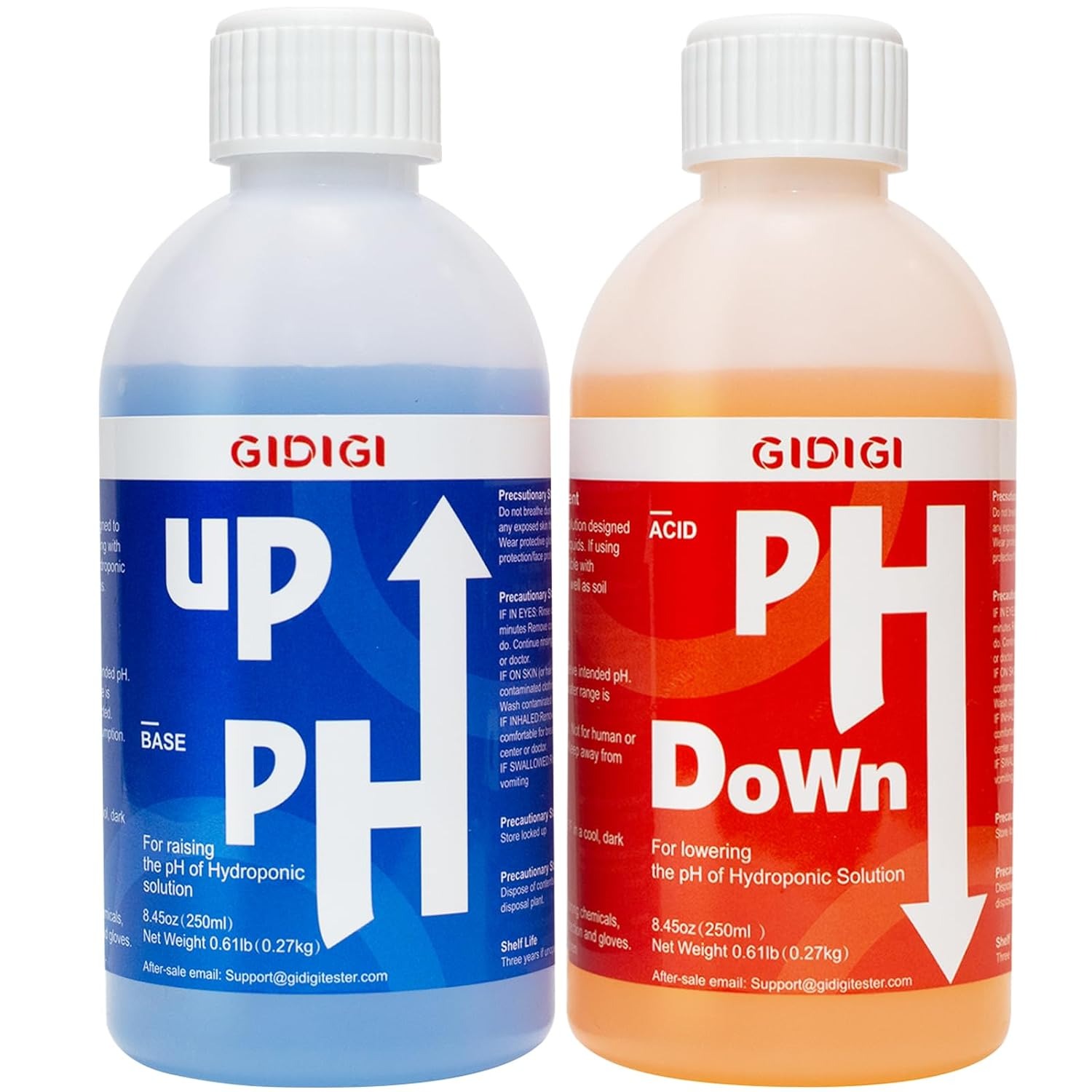
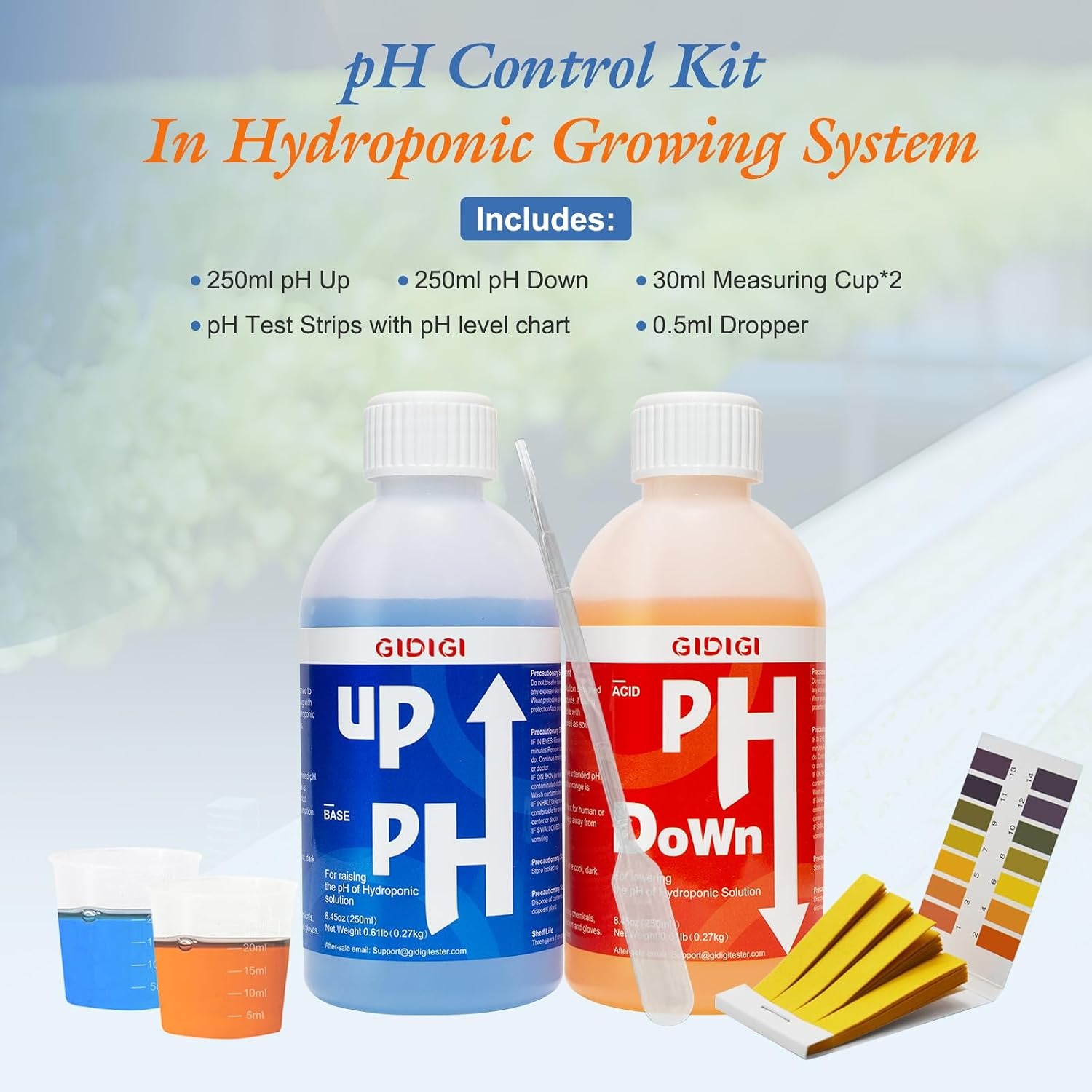
  • Two 250 ml Bottles
  • Strips and Chart
  • Cup and Dropper
  • Works Across Mediums

Price: $106.99 $127.99

  • Delivery time: 5 to 7 days, after 24 to 48 hours for handling and processing
  • Free delivery across New Zealand on orders $50+, otherwise a flat $22.00
  • Pay by card or PayPal, handled by the payment provider
  • 15-day change-of-mind policy, plus your Consumer Guarantees Act 1993 guarantees

Often bought together

Product specifications
BrandGIDIGI
ManufacturerJinanjixindianziyouxiangongsi
Model NumberGX-pHControl
Part NumberGX-pHControl
Bottle Volume250 ml each (pH Up and pH Down)
Kit ContentspH Up, pH Down, measuring cup, dropper, pH test strips, colour chart
pH Down ActivePhosphoric acid
Target Range Guide5.5 to 6.5
Guide DoseAbout 3 ml per litre, added gradually
Suitable ForHydroponics, coco coir, soil, aquaponics, indoor and outdoor pots
Shipping & returns

Tracked delivery anywhere in New Zealand. It is free on orders of $50 or more, and a flat $22.00 below that. Allow 5 to 7 days, after a 24 to 48 hour handling time.

This shop's own returns policy gives you 15 days from delivery to change your mind, on every product it sells. Send it back in its original packaging with proof of purchase, with buyer-paid return postage, processed within 24 to 48 hours of the return arriving. You cover the cost of returning it unless the item is faulty.

If it arrives faulty, damaged or not as described, we put it right at no cost to you under the Consumer Guarantees Act 1993's consumer guarantees, with reasonable return costs handled as required by law.

Shipping details · Refunds and returns

Two 250 ml BottlespH Up and pH Down supplied together so you can correct in either direction.
Strips and ChartTest strips and a colour chart give you a quick read before and after dosing.
Cup and DropperMeasure small doses properly instead of guessing with a splash from the bottle.
Works Across MediumsSuited to hydroponics, coco coir, soil beds, aquaponics and potted plants.

Keep your nutrient solution in the sweet spot with a pH up and down kit that makes small, careful corrections simple.

Two 250 ml concentrated solutions, a measuring cup, a dropper, pH test strips and a colour chart, so you can check your water and nudge it where your plants want it.

This pH control kit gives you both directions of adjustment in one box, with a 250 ml bottle of pH Up and a 250 ml bottle of pH Down.

The pH Down solution is made with phosphoric acid, and the pH Up side uses buffering agents to lift readings that sit too low.

A measuring cup, a dropper, pH test strips and a printed colour chart are included so you can check the water and dose it in small, controlled amounts.

The formulas are concentrated, with a guide dose of roughly 3 ml per litre, which means a little goes a long way in a home reservoir.

It suits hydroponic systems, coco coir, soil gardens, aquaponics and general indoor or outdoor pots of herbs, leafy greens and vegetables.

pH Up and Down Control Kit with Test Strips

Water is rarely neutral when it comes out of the tap, and nutrient solutions shift as plants drink and as salts build up. That drift matters, because the pH of your solution changes how easily roots can take up what you have already mixed in. This kit is the practical answer to that problem, giving you a bottle to bring a high reading down and a bottle to bring a low reading up, plus the small tools you need to do it carefully.

pH Up and Down Control Kit with Test Strips

The pH Down solution is formulated with phosphoric acid and is the one most home growers reach for, since tap water in many areas sits above the range most plants prefer. The pH Up side uses buffering agents to raise readings that have fallen too far, which can happen in coco coir or after a reservoir has been running for a while. Both are concentrated, so the guide dose is small, around 3 ml per litre, and the sensible approach is always to add a little, stir, wait and test again.

Testing is built into the kit rather than sold separately. The pH test strips and the colour chart give you a fast check of where the water sits before you touch a bottle, and another check after the solution has mixed through. Strips are a quick reference rather than a lab instrument, so if you run a larger system or want tighter control, pair them with a pH meter and use the strips as a convenient second opinion between meter readings.

The measuring cup and dropper are more useful than they look. Pouring straight from a 250 ml bottle into a reservoir is how people overshoot and spend the next twenty minutes chasing the reading back the other way. The dropper lets you add a few millilitres at a time to a small tub of water, and the cup lets you pre-measure a dose for a bigger tank, which keeps your adjustments slow and predictable.

Because the formulas work in water rather than being tied to one growing method, the kit fits a wide spread of setups. Deep water culture tubs, drip systems, coco coir pots, soil beds, aquaponic tanks and a simple watering can of herbs on a balcony all benefit from water that sits in a sensible range. Handle the pH Down with gloves, keep both bottles away from children, and store them capped and upright when you are not using them.

Not sure yet? That is fine.

You can change your mind. This shop's own returns policy gives you 15 days from delivery to send it back in its original packaging with proof of purchase, with buyer-paid return postage.

If goods are faulty, damaged or misdescribed, contact us for the remedy required by the Consumer Guarantees Act 1993. The appropriate repair, replacement or refund and reasonable return costs depend on the circumstances; change-of-mind conditions do not apply to statutory remedies. Read the full detail on our refunds and returns page, or ask us anything before you order.

Frequently Asked Questions

What exactly comes in this pH control kit?

You get one 250 ml bottle of pH Up and one 250 ml bottle of pH Down, a measuring cup, a dropper, pH test strips and a colour chart. That covers both directions of adjustment and gives you a way to check the water before and after you dose. Nothing else is listed as included in this record.

What is pH Up and Down used for?

It is used to move the pH of your water or nutrient solution into the range your plants prefer. pH Down lowers a reading that is too high, and pH Up lifts one that is too low. Keeping the solution in range helps roots take up the nutrients you have already mixed in.

What pH range should I aim for?

The listing suggests a working range of 5.5 to 6.5, which covers most common hydroponic and container growing. Different plants sit at slightly different points inside that band, so check the preference of what you are growing. Aim for a stable reading rather than chasing a single perfect number.

How much should I add per litre?

The guide dose given is about 3 ml per litre, which is roughly one tablespoon per gallon. Treat that as a starting reference, not a fixed rule, because tap water hardness varies a lot. Add a small amount, stir, wait a few minutes and test again.

What is in the pH Down bottle?

The pH Down solution is formulated with phosphoric acid. That is a common choice for a hydroponic pH adjuster because it also contributes phosphorus to the solution. Wear gloves when you handle it and keep it well away from children.

What is in the pH Up bottle?

The pH Up side uses buffering agents to raise a low reading. The record does not list a specific active ingredient beyond that description. Treat it with the same care you would give any concentrated garden solution.

Do I still need a pH meter?

The strips in this kit give you a fast colour-coded check, which is handy for a quick look between measurements. A pH meter gives you a finer reading and is worth having if you run a larger reservoir or want tighter control. Many growers use both, with strips as the convenient everyday check.

How do the test strips work?

You dip a strip into the solution, wait the moment the strip packaging suggests, then compare the colour against the printed chart. The chart matches colours to pH values so you can read the result without any equipment. It is a visual comparison, so check it in good light.

Can I use this in a soil garden?

Yes. The kit is described as suitable for soil gardens as well as hydroponics, so you can adjust the water in your watering can before it goes on the beds. Soil has its own buffering, so changes show up more slowly than they do in a reservoir. Test the water going in rather than expecting an instant change in the soil itself.

Does it work with coco coir?

It does. Coco coir is listed among the compatible mediums, and growers using coco often need both bottles, since readings in coco can drift in either direction. Check your run-off as well as your input water to see what is actually happening at the roots.

Is it safe for aquaponics?

Aquaponics is listed as a compatible use, but aquaponic systems hold fish and beneficial bacteria, so changes need to be very gradual. Make small adjustments across several hours rather than one large dose. If you are new to aquaponics, follow the guidance for your particular system and stock.

Will it work with my existing nutrients?

The listing states it is compatible with hydroponic nutrients and soilless mediums. Always mix your nutrients into the water first, then test and adjust the pH afterwards, because nutrients change the reading. Dosing before you add nutrients means you will just have to do it again.

How long will the bottles last?

That depends entirely on your water, your reservoir size and how often you change solution. Because the formula is concentrated and the guide dose is small, a home grower will typically get a lot of adjustments out of 250 ml of each.

Can I use it on lawns and outdoor plants?

The kit is described as suitable for indoor and outdoor plants including vegetables, herbs, flowers and lawns. For large outdoor areas the volume of water involved makes it less practical, so it is better suited to pots, beds and smaller watering routines. Measure the water you are treating so you can dose sensibly.

Should I shake the bottles before use?

Yes, the listing advises shaking well before use so the solution is consistent. Give each bottle a firm shake with the cap on, then let it settle for a second before pouring. This matters most if a bottle has been sitting unused for a while.

What happens if I add too much pH Down?

Your reading will drop below where you want it, and you will need a small amount of pH Up to bring it back. This is exactly why the dropper is included and why the advice is to add gradually. Overshooting wastes solution and stresses plants, so slow is better.

Do I need gloves?

We recommend wearing gloves with the pH Down solution, since it contains phosphoric acid. Avoid skin and eye contact, and rinse with water straight away if any splashes. Work over a sink or tray where possible so spills are easy to deal with.

How should I store the kit?

Keep both bottles capped tightly, upright, and in a cool dark place away from direct sun. Store them out of reach of children and pets, and well away from food and drink. The cup and dropper should be rinsed with clean water and dried before being put away.

Can I mix pH Up and pH Down together?

No. They are designed to work against each other, so combining them directly is pointless and messy. Use one or the other depending on which way your reading needs to move, and always measure between doses.

How often should I test my reservoir?

Daily is a good habit for an active hydroponic reservoir, because pH drifts as plants drink and as nutrient levels change. For soil pots, testing the water you pour on is usually enough. If you are troubleshooting a problem, test more often until the reading settles.

Why does my pH keep drifting?

Plants take up nutrients at different rates, which shifts the balance of the solution, and evaporation concentrates what is left behind. Small reservoirs drift faster than large ones. Regular testing with your pH control kit and small corrections keep things steadier than occasional big fixes.

Can I use this kit for just a few pots of herbs?

Absolutely. For small volumes, use the dropper to add tiny amounts to a jug or watering can, then test before you pour. This is one of the easier ways to use a pH adjuster, since the water volume is small and predictable.

Does hard tap water need more pH Down?

Harder water usually resists change more, so it often takes a slightly larger dose to shift the reading. That is why the 3 ml per litre figure is a guide rather than a rule. Work out the dose your own water needs once, note it down, and repeat it next time.

Is this suitable for a complete beginner?

Yes. Having both solutions, a dropper, a cup, strips and a chart in one box removes most of the guesswork from your first pH adjustments. Start with small doses, test often, and you will quickly learn how your water behaves.

Can I use the measuring cup for nutrients too?

It is better to keep the cup for pH solutions only, or rinse it very thoroughly between uses. Mixing residues can throw off your doses and waste product. A second cheap measuring cup for nutrients is a simple fix.

Will the test strips expire?

Test strips generally work best when kept dry and sealed, and they can become less reliable if they get damp. Keep the container closed and your fingers dry when taking one out. If colours start looking odd or faded, replace the strips.

Does this kit include a pH meter?

No. The kit includes test strips and a colour chart for quick visual checks, not a digital meter. If you want a numeric reading, a separate pH meter is a useful companion to this kit.

Would this make a good gift for a gardener?

It works well as a practical gift for anyone running a hydroponic setup, a coco coir grow or a serious container garden. It is the sort of thing growers need but often put off buying. Pair it with a pH meter if you want to make it a more complete present.

How long does delivery take?

Delivery is New Zealand wide. Orders are dispatched within 2 working days and then arrive within 7 working days by tracked courier. Delivery is free on orders of $50 or more, and a flat $22.00 otherwise.

Can I return it if it is not right for me?

Yes. You can return it within 15 days of delivery under our refunds and returns policy, which also explains how to send it back and who pays the return postage. Your rights under consumer law are not affected.

The Practical Guide to pH Up and Down for Home Growers

6 min read Hydroponics Company New Zealand

The problem nobody warns you about

You mix your nutrients carefully. You measure everything. The plants still look sulky, the new leaves come through pale, and nothing you add seems to help. Most of the time, the issue is not what is in the water. It is the pH of the water.

Plant roots only take up nutrients across a certain band of acidity. Push outside that band and the nutrients are still sitting there in the tank, perfectly measured and completely unavailable. Iron locks out first, then other trace elements, and you end up feeding more of something the plant cannot actually use. It is a frustrating problem precisely because it looks like a feeding problem.

A pH up and down kit is the fix, and it is a small one. Two bottles, a way to measure a dose, and a way to check the result. That is the whole job.

How pH adjusters actually work

The pH scale runs from very acidic to very alkaline, with neutral in the middle. Most tap water sits somewhere on the alkaline side, and most plants grown in water or in a soilless medium prefer things a bit more acidic, usually somewhere between 5.5 and 6.5.

pH Down lowers the reading. In this kit it is formulated with phosphoric acid, which is one of the common choices for a hydroponic pH adjuster. It brings the number down and also contributes phosphorus, which plants use anyway.

pH Up lifts a reading that has dropped too far. This one uses buffering agents. You will reach for it less often if your tap water is hard, but coco coir growers and anyone running a reservoir for several weeks will find they need it.

Both bottles are concentrated. The guide dose is about 3 ml per litre, which means a small squeeze does real work. That is good for economy and bad for anyone with a heavy hand, which is why the dropper in the box matters more than it looks.

Who this kit suits

If you grow herbs, leafy greens or vegetables in any kind of water-based or container system, you are the target buyer. Deep water culture tubs, drip systems, nutrient film setups, coco coir pots, raised beds watered by hand, aquaponic tanks and a tray of basil on a kitchen bench all respond to pH.

Beginners get the most immediate value, because the kit bundles the testing and the adjusting together. You are not trying to work out which bottle to buy first and which strips match which chart. Experienced growers tend to keep a kit like this as a backup even if they run a meter and buy larger bottles, simply because it is handy to have both directions covered.

It suits anyone whose water has been diagnosed as the problem. If you have ruled out light, temperature and feeding and still have odd leaf colour, pH is the next place to look.

Choosing the right approach for your setup

Three things decide how you should use a pH control kit: your water, your volume and how often you change your solution.

Start with your water. Fill a jug, test it with a strip, and write the number down. That single reading tells you which bottle you will mostly use. Hard water from the mains usually means pH Down does the heavy lifting. Rainwater or filtered water can swing the other way.

Then think about volume. A twenty litre reservoir and a two litre jug need very different doses. Working from the 3 ml per litre guide, a small jug might need under a millilitre, which is a dropper job. A reservoir is where the measuring cup earns its keep, because you can pre-measure a dose and add it in one go rather than pouring blind.

Finally, consider how often you top up or change. Systems that get topped up with fresh water daily will drift daily, because you are adding untreated water to a treated tank. Systems that get a full change every week or two are steadier between changes but swing harder at changeover. Neither is wrong, but the first needs more frequent small corrections.

A quick word on the strips. They give a colour-coded result against the included chart, which is quick, portable and perfectly adequate for everyday checks. They are a visual comparison rather than a precise instrument, so if you are running a bigger system or chasing a specific target, a pH meter alongside the strips gives you the best of both. The strips become your fast check, the meter becomes your reference.

Dosing without overshooting

Here is the routine that saves the most frustration.

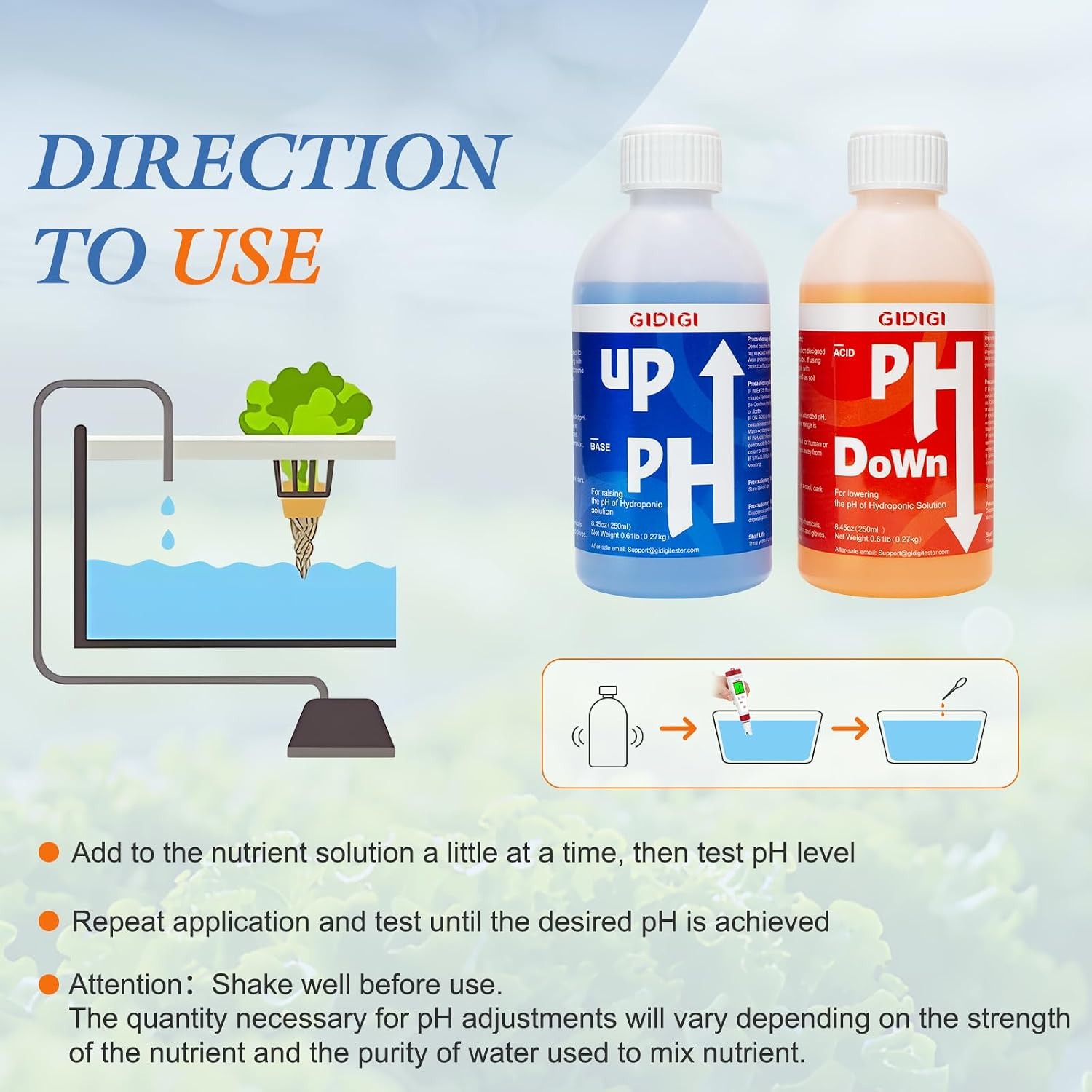
Mix your nutrients into the water first. Nutrients change pH, so adjusting before you add them is wasted effort. Stir properly and give it a minute to settle.

Test with a strip and compare it to the chart. Decide which direction you need to move.

Add a small dose. Smaller than you think. For a bucket, a few millilitres from the dropper. For a reservoir, measure into the cup and pour it in while the water is moving or stir it through.

Wait. Five minutes is a reasonable pause for the solution to distribute. Then test again.

Repeat if needed. Two or three small steps will always beat one confident pour, and you will not end up reaching for the other bottle to undo your own work.

If you overshoot, do not panic and do not dump the tank. A tiny amount of the opposite solution will bring it back. Just go even slower on the way back.

Handling and storage

The pH Down solution contains phosphoric acid, so treat it with respect. Wear gloves. Keep it off your skin and away from your eyes. Work over a sink or a tray where a spill is easy to wipe up, and rinse anything that gets splashed with clean water.

Both bottles need to be kept out of reach of children and pets, stored well away from food and drink. Cap them tightly, keep them upright, and park them somewhere cool and dark. Direct sun on a shelf is not where these belong.

Shake each bottle before you use it, as the listing advises. Rinse the measuring cup and the dropper with clean water after every session and let them dry. Keep the test strips sealed and dry, and handle them with dry fingers, because damp strips give you a reading you cannot trust.

Common mistakes worth avoiding

Adjusting before adding nutrients is the big one, and almost everybody does it once.

Chasing a single decimal point is another. A stable reading inside the band is far better for plants than constant fiddling to hit an exact number. If your solution sits at 6.1 and stays there, leave it alone.

Ignoring run-off in coco coir is a third. The water going in is only half the story. What comes out the bottom tells you what the root zone is actually experiencing.

And using tired strips. They are cheap to replace and they are the one part of the kit that quietly degrades if they get damp. If the colours look washed out, get fresh ones.

The short version

Your plants can only eat what the water lets them reach. This kit gives you both bottles you need, a cup and dropper so you can dose small, and strips with a chart so you can see what you have done. Mix nutrients first, test, add a little, wait, test again.

Gloves on for the pH Down, bottles capped and out of reach of children, and a note somewhere of how much your particular tap water needs. Do that once and the rest becomes routine. Most growers find pH is the easiest big problem they ever fix.

Browse the shop

Not sure which way your water needs to go?

Test first, tell us what you are growing, and our team can help you work out a sensible dosing routine.

Ask us a question

Page summary

This is a two-part pH control kit for home growers, supplied as one 250 ml bottle of pH Up and one 250 ml bottle of pH Down. The pH Down solution is formulated with phosphoric acid, and the pH Up solution uses buffering agents. The kit also includes a measuring cup, a dropper, pH test strips and a colour chart for checking readings. The listed guide dose is about 3 ml per litre, added gradually with re-testing between doses, and the suggested working range is 5.5 to 6.5. It is described as suitable for hydroponics, coco coir, soil gardens, aquaponics and indoor or outdoor pots. Brand is GIDIGI, model GX-pHControl. Weight, dimensions, colour, material and country of origin are not specified in this record.