Hydroponics Company New Zealand
Company
Shop By Category
Shop Products
T&Cs
Shop Online
  • Free standard delivery on orders $50+
  • NZD prices
  • NFT and deep water culture systems
  • Tracked delivery across New Zealand

Carbon Filter | 4 Inch Grow Tent Filter | Odour Control Filter

4 Inch Inline Carbon Filter for Grow Tents

$304.99 $365.99 Save $61
  • 210 CFM Rating
  • 38 mm Charcoal Bed
  • 4 Inch Opening
  • Mounting Kit Included

Price: $304.99 $365.99

  • Delivery time: 5 to 7 days, after 24 to 48 hours for handling and processing
  • Free delivery across New Zealand on orders $50+, otherwise a flat $22.00
  • Pay by card or PayPal, handled by the payment provider
  • 15-day change-of-mind policy, plus your Consumer Guarantees Act 1993 guarantees

Often bought together

Product specifications
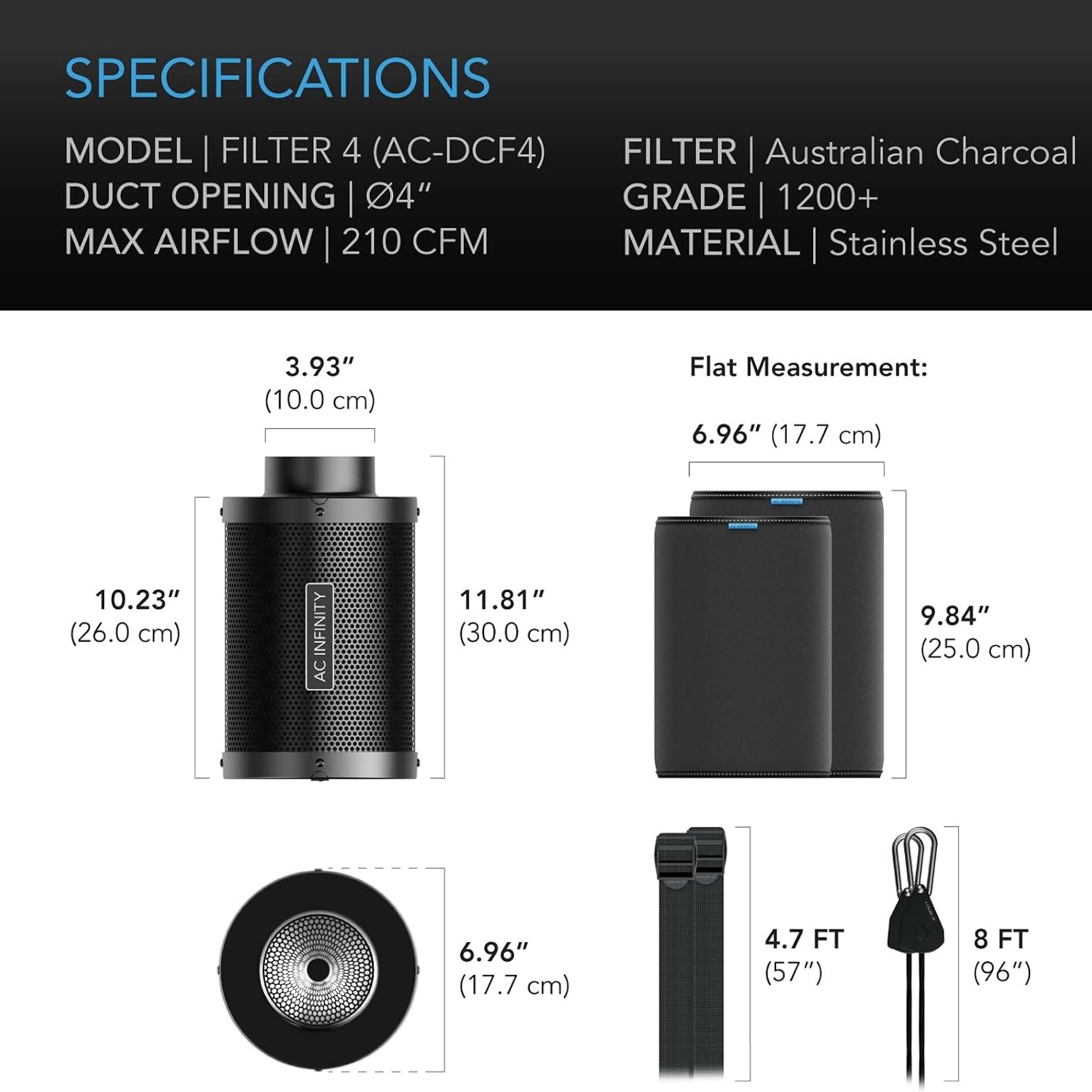
Duct Opening4 in (100 mm)
Length12 in (about 30 cm)
Airflow Rating210 CFM
Carbon TypeRC412 grade
Carbon Grade1200+ IAV
Carbon Bed Thickness38 mm
Flange MaterialAluminium
Flange DesignReversible
Mesh MaterialGalvanised steel
MaterialAluminium alloy steel
Mounting TypeClamp on
Compatible DevicesInline duct fans
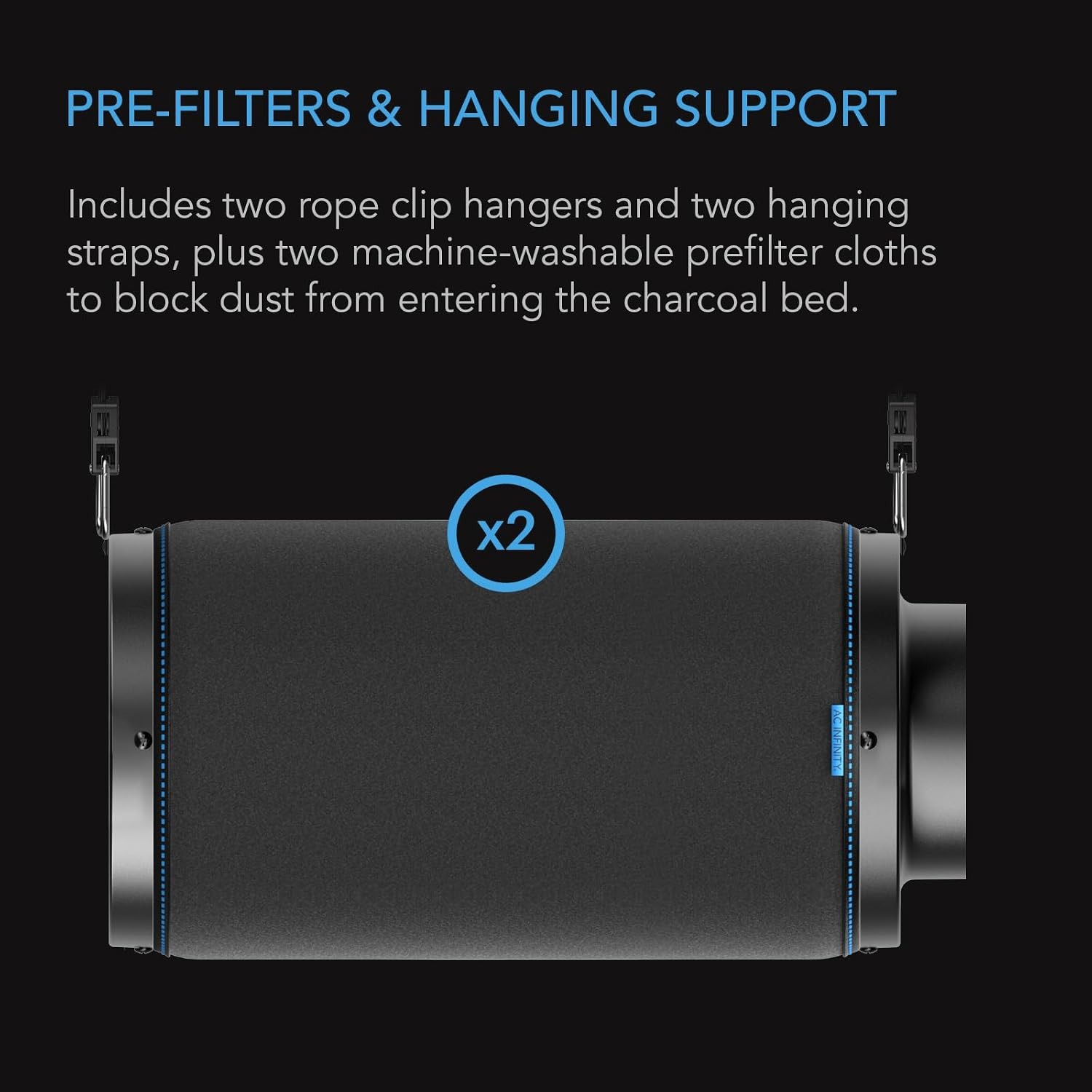
Included ComponentsTwo hanging straps, two rope clips, two pre-filters
Item Weight2.48 kg
Unit Count1
BrandAC Infinity
Model NumberAC-DCF4
UPC819137020665
Weight2.48 kg
Shipping & returns

Tracked delivery anywhere in New Zealand. It is free on orders of $50 or more, and a flat $22.00 below that. Allow 5 to 7 days, after a 24 to 48 hour handling time.

This shop's own returns policy gives you 15 days from delivery to change your mind, on every product it sells. Send it back in its original packaging with proof of purchase, with buyer-paid return postage, processed within 24 to 48 hours of the return arriving. You cover the cost of returning it unless the item is faulty.

If it arrives faulty, damaged or not as described, we put it right at no cost to you under the Consumer Guarantees Act 1993's consumer guarantees, with reasonable return costs handled as required by law.

Shipping details · Refunds and returns

210 CFM RatingSized for the air a small to medium tent fan moves.
38 mm Charcoal BedRC412 charcoal rated at 1200+ IAV.
4 Inch OpeningFits standard 100 mm ducting and inline fans.
Mounting Kit IncludedTwo hanging straps, two rope clips and two pre-filters.

Keep the smell of compost, nutrients and strong herbs inside the tent with a carbon filter that handles the air you are already moving.

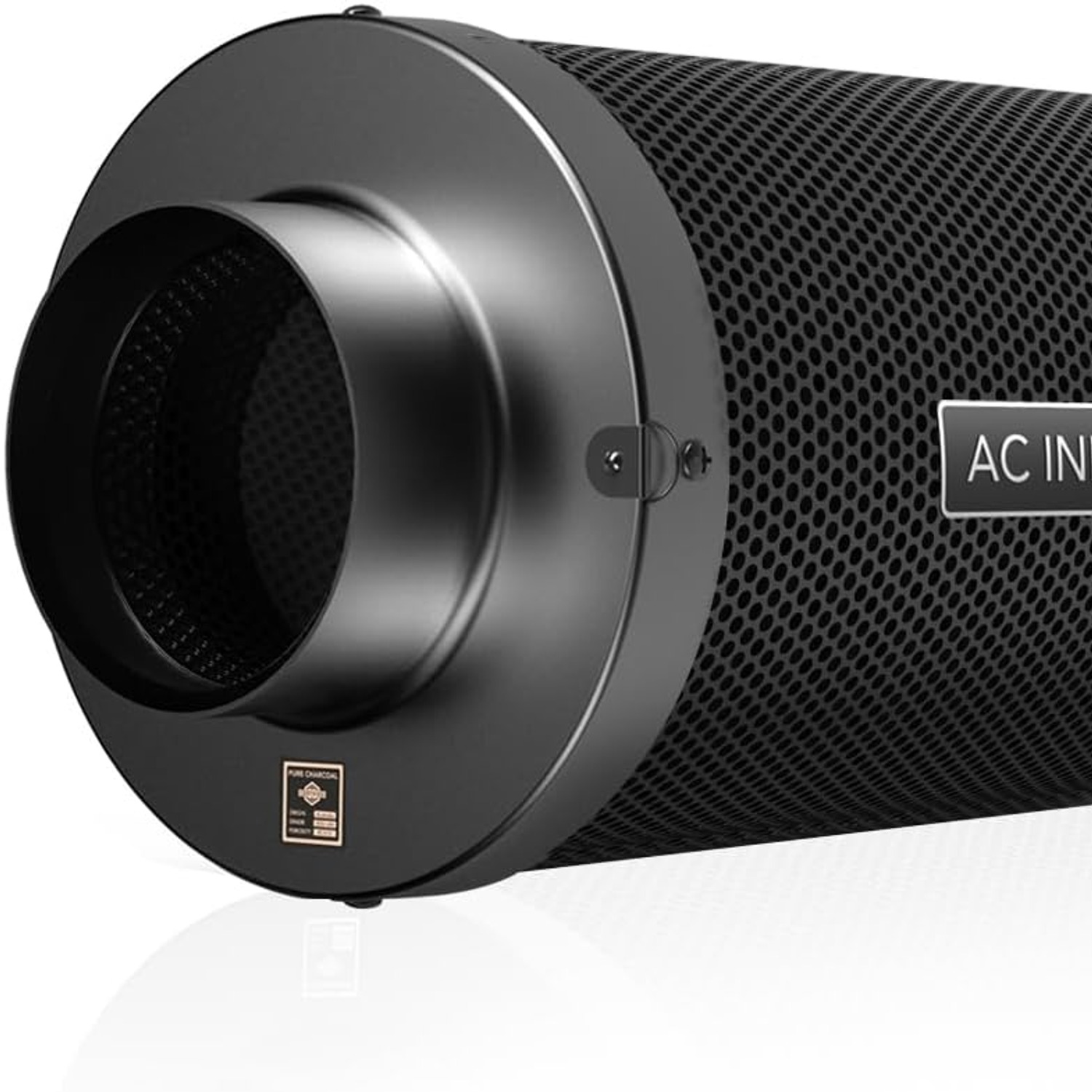
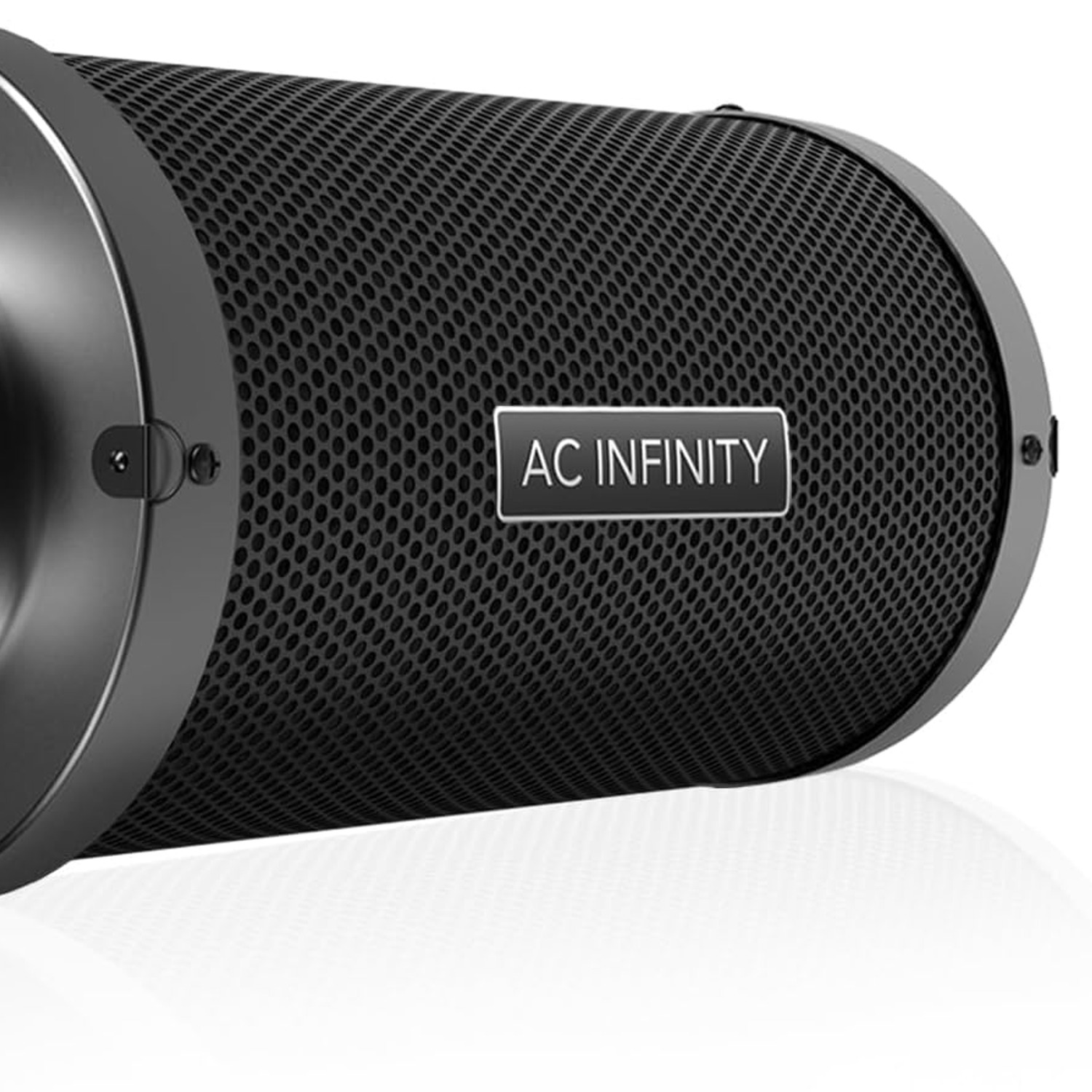
A 4 inch (100 mm) duct opening, 38 mm bed of virgin charcoal, reversible aluminium flanges and galvanised steel mesh, supplied with two hanging straps, two rope clips and two pre-filters.

A 4 inch (100 mm) carbon filter built to stop grow tent smells from drifting into the rest of the house.

The 38 mm bed of RC412 charcoal, rated at 1200+ IAV, sits behind galvanised steel mesh on both sides.

Aluminium flanges are reversible, so you can flip the filter and even out how the carbon is used.

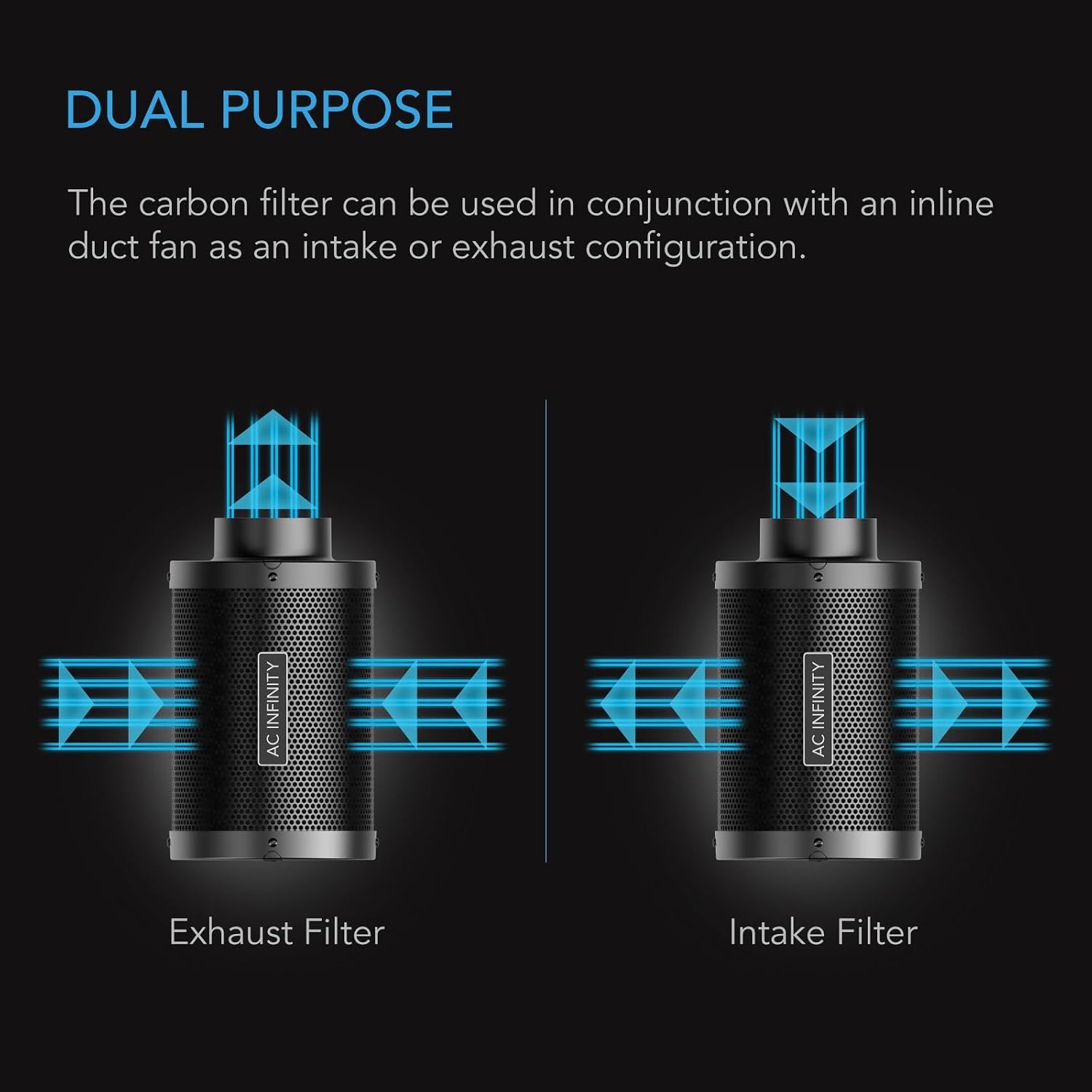
It carries a 210 CFM airflow rating and works in either an exhaust or an intake position.

Two hanging straps, two rope clips and two washable pre-filters come in the box, so you can hang it the day it arrives.

4 Inch Inline Carbon Filter for Grow Tents

Indoor growing has one problem that nothing else really fixes. Air moves, and smell moves with it. Damp compost, bottled nutrients, a tray of basil or coriander at full size, all of it builds up inside a sealed tent and then rolls out the moment you unzip the door. A carbon filter is the part that deals with that. Air is pulled through a bed of activated charcoal, the charcoal holds on to the odour molecules, and what leaves the duct is far less noticeable than what went in.

4 Inch Inline Carbon Filter for Grow Tents

This one is built around a 4 inch (100 mm) duct opening, which is the common size for compact tents and the inline fans that suit them. The body is about 12 inches long (roughly 30 cm) and carries an airflow rating of 210 CFM, so it is matched to small and medium setups rather than large multi-fan rooms. The charcoal inside is RC412 at a 1200+ IAV grade, packed to a bed thickness of 38 mm and held between galvanised steel mesh on both the inner and outer face.

4 Inch Inline Carbon Filter for Grow Tents

The flanges are aluminium and reversible. That matters more than it sounds. Air tends to work through one end of a carbon bed first, so being able to unbolt the flange, turn the filter around and run it the other way lets you make better use of the charcoal you paid for. The clamp-on mounting type means it attaches with standard duct clamps, and the whole unit weighs 2.48 kg, light enough to hang from the top bars of a tent with the straps provided.

4 Inch Inline Carbon Filter for Grow Tents

In the box you get two hanging straps, two rope clips and two cloth pre-filters. The pre-filter sleeve slips over the outside of the body and catches dust and loose carbon residue before it reaches the ducting. Having a spare means you can wash one and keep running with the other. The straps and clips cover the usual tent mounting job without a trip to the hardware shop.

4 Inch Inline Carbon Filter for Grow Tents

One thing to be clear about. A carbon filter does not move air on its own. It needs an inline duct fan to pull air through it, and that fan is not included with this filter and is not sold here. You will need to supply your own fan and ducting. Pick a fan whose airflow sits in a sensible range for a 210 CFM filter, connect filter to fan with a short run of 100 mm duct, and you have the core of a working extraction setup.

Not sure yet? That is fine.

You can change your mind. This shop's own returns policy gives you 15 days from delivery to send it back in its original packaging with proof of purchase, with buyer-paid return postage.

If goods are faulty, damaged or misdescribed, contact us for the remedy required by the Consumer Guarantees Act 1993. The appropriate repair, replacement or refund and reasonable return costs depend on the circumstances; change-of-mind conditions do not apply to statutory remedies. Read the full detail on our refunds and returns page, or ask us anything before you order.

Frequently Asked Questions

What does a carbon filter actually do in a grow tent?

It traps odour molecules as air passes through a bed of activated charcoal. The air that leaves your duct smells much weaker than the air inside the tent. It does not remove heat or humidity, only smell and some airborne chemicals.

Does this filter come with a fan?

No. The filter has no motor and cannot move air by itself. You need a separate inline duct fan, which is not included with this product and is not sold here.

What size ducting do I need?

The duct opening is 4 inches, which is 100 mm. Use standard 100 mm flexible or rigid ducting and a matching duct clamp at each joint.

What is the airflow rating?

The filter is rated at 210 CFM. That is the maximum airflow it is designed to handle while still doing its job on odour.

How long is the filter body?

It is 12 inches long, which is about 30 cm. That length matters when you are planning headroom inside a tent, since the filter usually hangs near the top.

How much does it weigh?

The listed weight is 2.48 kg. The two hanging straps included in the box are intended for suspending a filter of this size from tent support bars.

What type of carbon is inside?

It uses RC412 charcoal at a 1200+ IAV grade. The bed is packed to a thickness of 38 mm between two layers of mesh.

What does IAV mean?

IAV is an iodine adsorption value, a number used to describe how much surface area the charcoal has available. A higher figure generally means more capacity per gram. This filter is specified at 1200+ IAV.

Can I use it as an intake filter as well as an exhaust filter?

Yes. The design allows air to pass in either direction, so it can sit on the intake side or the exhaust side of your fan. Most people run it on exhaust, because that is where the smelly air leaves the tent.

What are the reversible flanges for?

Air usually works through one end of the carbon bed harder than the other. Unbolting the flange and turning the filter around spreads that wear more evenly across the charcoal.

What is included in the box?

One filter, two hanging straps, two rope clips and two pre-filters. Ducting, clamps and a fan are not included.

What is the pre-filter for?

The cloth sleeve fits over the outside of the filter and catches dust and loose carbon before it reaches your fan or ducting. Having two means you can wash one while the other stays in service.

Can I wash the pre-filter?

Yes, the cloth pre-filter can be washed. Let it dry completely before you put it back on, since a damp sleeve will draw moisture into the carbon bed.

Can I wash the filter itself?

No. Never run water through the charcoal. Wet carbon stops working properly and can take a long time to dry. Brush or vacuum the outer mesh instead.

What size tent does this suit?

It is a sensible match for small to medium tents where the fan airflow sits around or below the 210 CFM rating. Larger rooms with bigger fans need a larger filter and duct size.

How do I choose a fan to go with it?

Look for a 4 inch inline duct fan whose airflow fits within the 210 CFM rating. A fan with speed control helps, because you can dial airflow down for quieter running without losing odour control.

Should the filter go before or after the fan?

Both work. Hanging the filter inside the tent with the fan pulling through it is the most common layout, because the fan sits downstream of the clean air and stays cleaner itself.

Does it need to hang, or can it sit on the floor?

Hanging is usual and the straps are supplied for that. If you do stand it upright, make sure the body is supported and the duct is not taking any weight.

Will it reduce how much air my fan moves?

Any filter adds some resistance. This one uses wide mesh openings to limit that effect, but you should still expect a small drop compared with a bare duct. Matching fan size to the 210 CFM rating keeps the loss manageable.

Does it remove heat or humidity?

No. It only handles odour and airborne chemicals. Heat and humidity are managed by airflow volume, extraction and, if needed, a dehumidifier.

Can I use it in a kitchen or workshop instead of a tent?

Carbon filtration is used in plenty of ventilation projects, not just growing spaces. As long as you can fit 100 mm ducting and a suitable fan, the same principle applies.

How do I know when the carbon needs replacing?

The usual sign is smell starting to come through the exhaust when it previously did not. Lifespan depends on how many hours it runs, how strong the odour load is and how humid the air is, so there is no fixed figure.

Does humidity affect the filter?

High humidity loads the charcoal with moisture and leaves less capacity for odour. Running a tent at sensible humidity levels, and keeping the filter out of direct water spray, helps it work as intended.

Can I mount it horizontally?

Yes. Horizontal mounting with the straps is common when ceiling height is tight. Support the body in two places so the weight is spread along the length.

Is it suitable for growing herbs and leafy greens indoors?

Yes. Compost, nutrient solutions and strongly scented herbs like basil, coriander and mint all put smell into the air, and this is the part that keeps it inside the tent.

What is the model number?

The model is AC-DCF4 from AC Infinity, with UPC 819137020665. Quote that if you are matching parts or checking compatibility with an existing setup.

What is the filter made of?

The flanges are aluminium and the mesh is galvanised steel, listed overall as aluminium alloy steel. The carbon bed sits between the two mesh layers.

How is it mounted to ducting?

It is a clamp-on design. Slide 100 mm duct over the flange and tighten a duct clamp around it. The same clamp type is used at the fan end.

How long does delivery take?

Delivery is New Zealand wide. Orders are dispatched within 2 working days and then arrive within 7 working days by tracked courier. Delivery is free on orders of $50 or more, and a flat $22.00 otherwise.

Can I return it if it is not right for me?

Yes. You can return it within 15 days of delivery under our refunds and returns policy, which also explains how to send it back and who pays the return postage. Your rights under consumer law are not affected.

How to Choose a Carbon Filter for a Small Grow Tent

6 min read Hydroponics Company New Zealand

The problem nobody warns you about

People plan an indoor grow around light and water. They measure the tent, work out the shelf height, buy a timer. Then the first real crop of basil comes in, or a tray of compost gets turned, and the whole hallway smells like a garden centre.

That is the part a carbon filter solves. Not light, not watering, not heat. Smell. A sealed tent concentrates every scent inside it, and the moment air leaves through the exhaust duct, all of that scent goes with it into the room.

The fix is simple in principle. You put a bed of activated charcoal in the path of the air leaving your tent. Charcoal is full of tiny pores, and odour molecules stick to the walls of those pores as they pass through. What comes out the other end is far less noticeable.

How this filter is put together

Air enters through the galvanised steel mesh on the outside of the body. It then passes through a 38 mm layer of RC412 charcoal, rated at 1200+ IAV, and out through a second mesh layer into the central duct opening. From there it goes into your ducting.

The duct opening is 4 inches, or 100 mm, which is the size most compact tents and their fans use. The body is 12 inches long, around 30 cm, and the whole thing weighs 2.48 kg. Two hanging straps and two rope clips come in the box, which is usually all you need to suspend it from the top bars of a tent.

The flanges are aluminium and they can be reversed. That is a genuinely useful detail. Carbon beds do not wear evenly, because air tends to find the easiest path and work through one section first. Turning the filter around partway through its life spreads that out.

There is also a cloth pre-filter, and two of them are supplied. The sleeve goes over the outside of the body. It catches dust from the tent and any loose carbon residue from inside, which keeps your fan blades and ducting cleaner. Two means one can be washing while the other keeps working.

The fan is a separate purchase

This is worth saying plainly, because it catches people out. A carbon filter has no motor. It cannot pull air through itself. You need an inline duct fan, and that fan is not included with this filter and is not sold here.

So your shopping list is three items, not one. Filter, fan, ducting. Plus a couple of duct clamps, which are cheap and often come with the ducting.

When you pick the fan, look at its airflow figure against the filter's 210 CFM rating. You do not want a fan that massively overshoots, because air that moves too fast through the charcoal has less contact time and the odour control suffers. A fan at or below that rating, ideally one with a speed controller, gives you room to adjust.

Working out whether 4 inch is your size

Duct size follows tent size, roughly. A 4 inch system suits small and medium tents, the kind of footprint you would set up in a spare room, a garage corner or a laundry. Once you get into larger rooms with multiple lights and higher heat loads, you move up to 6 inch and the equipment gets correspondingly bigger.

The easiest check is your existing gear. If you already own a fan, look at its duct diameter. If it is 100 mm, this filter bolts straight into that system. If it is 150 mm, you need the larger filter instead, and adapters are a poor substitute because they choke the airflow.

If you are starting from scratch, think about how much air you want to move. Small tents need the air changed often, but the total volume is low, which is exactly what a 4 inch setup is built for.

Exhaust or intake

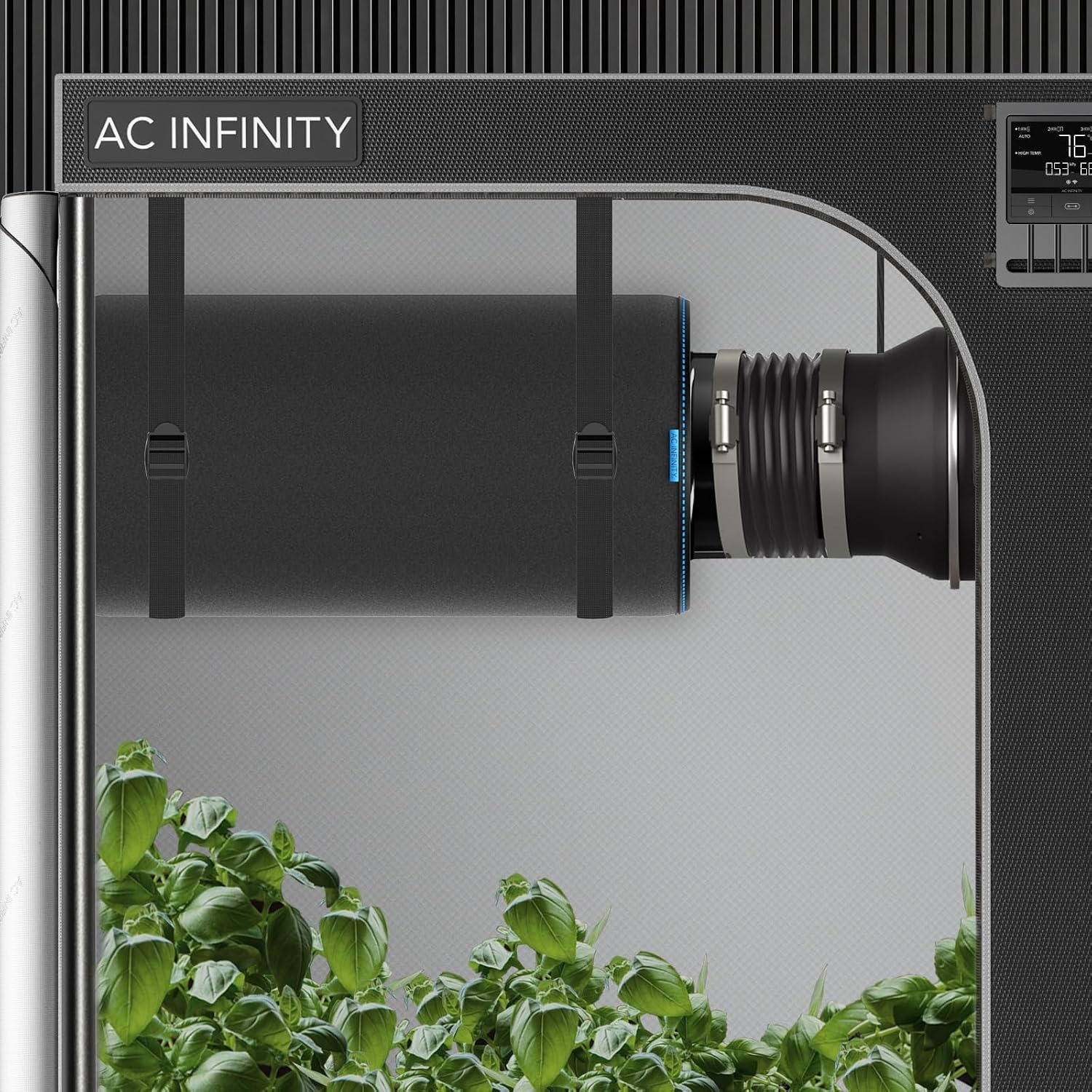
Most people hang the filter inside the tent, high up, with the fan after it. Air is pulled through the charcoal first and then through the fan, then out the duct. That keeps the fan clean and puts the filter where the warm, scented air collects.

You can also run it on the intake side if your layout calls for it, since air passes through the bed in either direction. This is less common for odour work but can help if your incoming air is coming from a dusty or smelly space.

Either way, keep the duct runs short and avoid sharp bends. Every bend costs you airflow, and flexible duct scrunched into a tight corner costs a lot.

Looking after it

Carbon filters are low maintenance, but there are a few things that shorten their working life unnecessarily.

Keep it dry. Charcoal that gets wet is charcoal that is busy holding water rather than odour. Do not spray water near it, do not run it in a tent at extreme humidity if you can avoid it, and never try to rinse the bed out.

Wash the pre-filter when it looks grey. Hand wash or machine wash it, then dry it fully before refitting. A damp sleeve pulls moisture straight into the carbon.

Handle it gently. Dropping a filter can settle the charcoal inside and leave a gap at the top of the bed, which air will then take as a shortcut. Carry it upright and store it upright.

Flip it when it is partway through its life. Unbolt the flange, turn the body around, reconnect. It takes five minutes and makes better use of the carbon you already own.

When it is time to replace

There is no clock on a carbon filter. How long one lasts depends on running hours, how strong the odour load is, and how humid the air has been. A filter running twenty-four hours a day in a damp space will be finished long before one running a few hours a day in dry conditions.

The sign is always the same. Smell starts getting through the exhaust when it did not before. Once that happens, the bed is saturated and no amount of cleaning will bring it back. Replace the whole unit.

A sensible setup checklist

Before you order, confirm four things. Your tent takes 100 mm ducting. You have, or are buying, an inline fan with airflow in a sensible range for 210 CFM. You have enough headroom inside the tent for a 30 cm filter hanging from the top bars. And you have duct and clamps to join it all together.

Once those line up, the install is straightforward. Hang the filter with the supplied straps, slide the pre-filter sleeve over it, clamp the duct to the flange, clamp the other end to the fan, and run the fan outlet to wherever you are venting.

The short version

A carbon filter is the part of a grow tent that keeps the smell where it belongs. This one has a 4 inch (100 mm) duct opening, a 38 mm bed of RC412 charcoal at 1200+ IAV, reversible aluminium flanges, galvanised steel mesh and a 210 CFM airflow rating. It weighs 2.48 kg and comes with two hanging straps, two rope clips and two washable pre-filters.

It does not come with a fan, and we do not sell the fan here, so plan for that separately. Match the fan to the 210 CFM figure, keep the ducting short, keep the filter dry, and wash the pre-filter when it gets dusty. That is most of the job.

Browse the shop

Not sure if 4 inch is your size?

Tell us your tent size and the fan you already own, and we will point you to the filter that matches.

Ask us a question

Page summary

This is a 4 inch (100 mm) inline carbon filter for grow tents and hydroponics spaces, model AC-DCF4 from AC Infinity, UPC 819137020665. It is about 12 inches (30 cm) long with an airflow rating of 210 CFM. The carbon is RC412 at 1200+ IAV in a 38 mm bed, held between galvanised steel mesh with reversible aluminium flanges, clamp-on mounting, and an overall weight of 2.48 kg. Two hanging straps, two rope clips and two washable pre-filters are included. An inline duct fan is required to draw air through the filter and is not included or sold with this item. Colour, material finish, country of origin and exact overall dimensions are not specified in this record.